South Africa’s “horny” immigrants get a new lease on life in Israel!
South Africa’s rhinos once flourished on the country’s vast savannah. One of the “big five” that made South African safari a desirable destination for anyone wanting to experience the unique pleasure of seeing her animals in their natural habitat.
Sadly, these beautiful, noble beasts have become the object of desire for another group. This time, with more nefarious intentions. Rhino poachers, predominantly from the Far East, hunt these creatures for their horns, believing that they are aphrodisiacs or can be used as medicine. As a result, rhino populations in South Africa have been decimated as trophy hunters and others who kill them for their horns.
There are efforts on the ground in South Africa to deal with poaching and punish those responsible but there is an unlikely hero in this whole story – Israel! While Israel is renowned for many things – cutting edge innovation, incredible history and Gal Gadot, few know about the Jewish state’s record in conservation. You may be pleasantly surprised to know that Israel is leading the way in rhino conservation.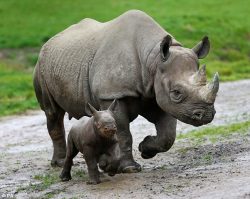
Rhinoceros have never been indigenous to Israel so what is the interest in bringing them to the holy land for the purposes of breeding?
South Africa’s rhinos are immigrating to greener pastures. Literally!
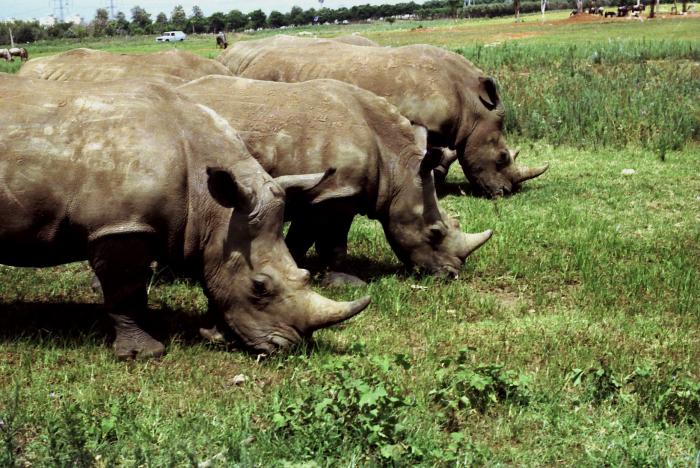
The Ramat Gan Safari Park, just outside Tel Aviv, has initiated a very successful breeding programme and has seen tremendous results since the 1970’s. The Safari park is part of a global conservation effort to save these precious animals from extinction. The white rhinoceros, also known as the square-lipped rhinoceros, is in the greatest danger. Some 78 zoos are taking part in a European breeding project that so far numbers 301 rhinos. The Ramat Gan Safari has a larger herd than any in Europe and so far there have been 29 white rhinos born at the Ramat Gan Safari park.
World renowned South African conservationist, Braam Malherbe, lauded the efforts being made by the Ramat Gan Safari Park and believes it is a model that should be implemented globally. As a commitment to breeding this highly endangered species, two young females were imported from Pretoria Zoo in 2012.
 In 1978 the first white rhino was born at the Safari park. He was named ‘Shalom’ since his birth coincided with the signing of the Camp David Peace Accords. Shalom was a harbinger of great things to come!
In recent years, the park has celebrated the birth of baby Terkel, Tupak, Tashi and Timor, all rare white rhinos born to their South African immigrant mother, Tanda. Celebrations have also been conducted for babies Rami, Kipenzi and many more!
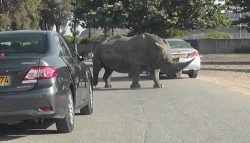
In fact, life for rhinos is so good in Israel that a few have tried to explore the sites for themselves. Rhinos have escaped their enclosures at the Safari Park and have sauntered out into the park or the street – much to the absolute astonishment of passers-by!
It can be said that although these horned South African imports do not have to worry about dealing with the challenges that some immigrants have to deal with but instead enjoy the “life of Riley.”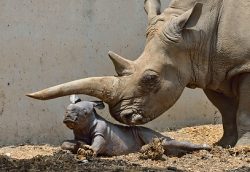
This is exactly how it should be.
*UPDATE: as of October 2018-there are 13 healthy, happy rhinoceros living at the Zoological Center Tel Aviv-Ramat Gan, popularly known as the “Safari”.