South African Architects Changing the Face of Israel
The passing in July 2017 of Gilbert Herbert, Professor Emeritus and former Dean of the Faculty of Architecture and Town Planning at Haifa’s prestigious Technion, brought home the contribution of South Africans to transforming Israel’s architectural landscape.
In 1997, I interviewed Prof. Herbert following a ceremony at the Technion honouring 50 years of teaching in the profession. “It is in this realm that he has left such an indelible legacy,” said Professor Harry Brand, a South African who immigrated to Israel in 1962 and a former student of the late professor.
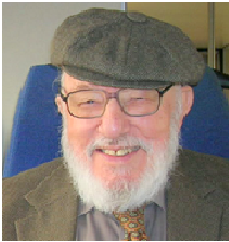
Prof. Gilbert Herbert
(See Israel Link Prof. Brand’s tribute http://www.israelink.co.za/2017/08/08/professor-emeritus-gilbert-herbert/)
Beyond Israel, the ‘world of architecture’ is indebted to the creative spirit of this former South African, who at the age of 22, received his first full-time academic appointment as a lecturer at the University of Witwatersrand (Wits). For the next fifty years, he lectured and pursued his research at such imminent institutions such as Harvard, the University of Adelaide in Australia, the Federal University of Parana in Brazil, and closer to his native South Africa – Wits and the University of Natal.
“In 1967, I informed the University of Adelaide that Valerie and I would be leaving Australia to go to Israel.” When asked why, Herbert replied:
“Because I am a Zionist, of course. Why else?”
In 1968, Herbert was appointed professor of Architecture at the Technion, and later served as Dean of the Faculty of Architecture and Town Planning. “This was in 1973. It was a difficult time to be a dean. Disrupted by the Yom Kippur War (or ‘October War’), we tried to make up for lost time by sending material to our students stationed in Syria and Egypt. Compared to other faculties in the Technion, we had a high proportion of women students. That meant that in the immediate period following the war, we had students, but few teachers. But, we persevered because the will was there.”
Trendsetting
“What had been the trends in Israeli architecture from the pre-State period?” I enquired.
“Well, in the 1930s, Israel was one of the few places in the world, aside from South Africa and Brazil, where modern trends dominated the architectural landscape. Israel, a haven for Bauhaus architects, was at the cutting edge of the modern movement. Of course, all the problem of building quickly and cheaply came with it. That is not the fault of the style, but of the times. The architecture had a kind of homogeneity which in those days was not regarded as a liability. Today, the mood of the world is different. Everyone is looking for originality, and I’m not sure that the quest for originality hasn’t gone a little crazy.”
Herbert noted that “what we are seeing in Israel is what is happening throughout the modern world. Our architects are reading the same magazines and journals as are the architects in Frankfort, Paris, and London. Consequently, it is becoming more difficult to differentiate between new commercial and public buildings in downtown Tel Aviv and those in New York, Hong Kong and Sydney.”
Responding to the familiar criticism of the stereotypical façades of residential buildings in Israel, Herbert responded with, “Whether stereotype is a criticism, I’m not sure. Take the Georgian squares of London or the boulevards of Paris. Some of the finest architectural periods in history were charaterised by uniformity. Discipline is required for the great mass of building which makes a city. You can’t have everybody doing their own thing. Today, if you are going to design buildings for how they are going to look in the journals, and less and less for how they are going to be used, I’m not sure that they will add together to make good cities.”
Holistic High-riser
The theme of the keynote address at the 1997 ceremony at the Technion honouring Prof. Gilbert Herbert was by Sir. Jack Zunz, an imminent engineer and principal structural designer of the Sydney Opera House. An old friend of Herbert’s, his lecture – “Architecture or Engineer – What’s in a name?” – presented a holistic view of the design process, the leitmotif of much of Herbert’s writings. Holism is a term introduced into the architectural discourse by Prof. Herbert as long ago as 1955. “Collaboration between architect and engineer can be very creative. And unless there is a symbiotic relationship between those two disciplines, or in other words, an active interaction between the people who are making the building, you are not going to get great results.”
“Where does architecture go from here?” I asked 20 years ago.
“Look to the past and learn what is valuable. Extrapolate. It doesn’t mean you recreate the past; you cannot. We are creating a new world; going in new directions and using new materials. But there are good values from the past that we can ‘build’ on.”
Herbert concluded that 20-year-old interview, “I have applied this axiom to my Judaism, as well as every other aspect of my life.”
During his academic career, Herbert published numerious books and scholarly papers earning him many honours, notably the prestigious Sir. Herbert Baker Scholarship, the Joseph H. Hazen Award for Literature on Twentieth Century Art, and an honorary doctorate from the University of the Witwatersrand, where he taught for over forty years. “Many of my former South African students are practicing architecture in Israel today. ‘Youngsters’ like Leon Charney, Maurice Kaplan, Ben Kaplan, Harry Brand, Harry Whiteson, Benny Peleg and Hillel Evenar, to name a few. Today they are grandparents, but they are still my boys!”
A year after his 1997 interview, I interviewed one of Gilbert’s students, Prof. Harry Brand, who had designed two major buildings in Israel – one commercial the other industrial – for two prominent South Africans, both of whom have passed on – Graham Beck and Mendel Kaplan.
Setting Standards
Even to the casual observer, Israel’s architectural landscape has undergone an impressive transformation. Stereotypical utilitarian building spawned in the years of a struggling economy coping with survival, had given way to a surge of creative energy and talent finding expression in commercial, residential, cultural, and industrial properties. The language of Israel’s architecture was evolving and responding to an increasingly affluent society that could afford the costs of redefining the workplace.
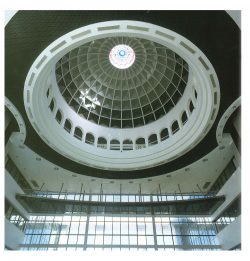
Beck Science Centre
The opening in 1998 of two spectacular complexes by Prof Harry Brand revealed that South Africans were in the forefront of this movement.
Having designed some of Israel’s most prestigious industrial facilities, from Stef Wertheimer’s Teflin Industrial Park in the Galilee to Jerusalem’s Malha Industrial Park, the mid-nineties saw Harry designing:
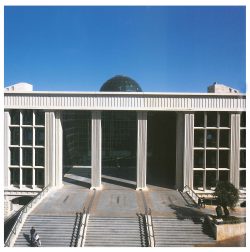
Beck Science Centre
– the $35 million Beck Science Centre in Har Hotzvim Industrial Park in Jerusalem, financed by South African coal magnate Graham Beck,
– and the steel-wire manufacturing factory, Barzelan in Beit Shemesh for Mendel Kaplan’s Capegate Group.
When Harry Met Beck
“Beck made it clear that he didn’t want a building that catered to passing fancies and fashions,” explained Harry. “It should be timeless – good today and good in a hundred years’ time. He was also concerned that while incorporating the state-of-the-art hi-tech facilities, it should respect the environment and reflect the character of Jerusalem.”
Until the late President Weizman opened the Beck Science Centre in 1998, few Israelis had ever heard of Graham Beck. However, he was no newcomer to Israel. His grandfather, Yeshaya Mizrachi, moved from Jerusalem to South Africa in 1880, and became the first rabbi of the Transvaal’s small Jewish community.
Dubbed the “Hi-tech Temple”, Harry explained the challenge of aesthetically integrating the highly complicated electro-mechanical systems by designing a series of modular ducts and chases and incorporating them as decorative elements in the façade. What appears to be large classical columns of Jerusalem Stone, are in fact service ducts. The decorative wall around the roof conceals pumps, fans and filters. Stepping back to view the building in its totality, we sense that it is not just a juxtaposition of tastes, but a carefully crafted fusion of contrasting styles and material.
Designed as a smart building, it literally was designed for ‘smart’ people. “The people who will work in this building will be graduates of the finest universities and deserve the best working environment,” said Harry.
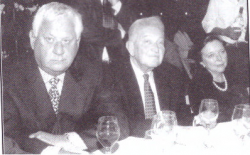
Opening in 1997 of the Beck Science Centre in Jerusalem (l-r) Graham Beck, Israeli President Ezer Weizman and Rona Beck.
After all, where do Israelis spend most of their waking hours if not at work and the Beck Science Centre ‘accommodates’ this obvious fact.
This was exactly what the South African client had in mind!
Beck admitted, “I’m no Einstein and to tell you the truth, I was never interested in hi-tech; I’m a coal guy, but I know that what Israel has to offer is BRAINS! These people deserve the best and that is what we are going to give them.”
The most striking element of the building is the large atrium. “crowned with a large dome,” said Harry. “It occupies an area of 700 sq. metres, which will serve as a space for cultural events such as concerts and art exhibitions. It will be a pace not only for workers to relax but which will attract visitors.”
Twenty years later, that vision is a reality.
A graduate of Wits, “where I was lectured by Prof. Gilbert,” Prof. Brand immigrated to Israel in1962, and was hence unknown to Beck. “He dragged me around Johannesburg pointing out landmark buildings trying to impress upon me the kind of standard he wanted.” Beck need not have worried.
Following the ‘unveiling’, “It is beyond our wildest dreams,” exclaimed Beck beaming with pride.
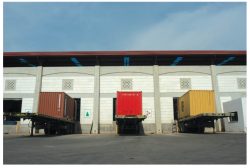
“Barzelan” – Beit Shemesh
From ‘coal man’ to ‘man of steel’, a half-hour scenic drive west from Beck’s hi-tech centre in Jerusalem, is another South African’s vision, Mendel Kaplan’s wire drawing and specialized coating factory, Barzelan. Situated in a wooded industrial park overlooking Beit Shemesh, the student of Prof. Gilbert designed in Mendel’s words, “One of the most sophisticated and certainly most aesthetic factories of its kind in the world.”
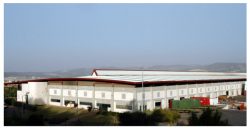
“Barzelan” – Beit Shemesh
Standing outside Barzelan, one might mistake the stone-columned structure for a classy mountain hotel. It blends scenically into the surrounding wooded limestone hills. Bazelan had come a long way since Mendel’s grandfather, Menachem Mendel Kaplan worked as a blacksmith in the small Lithuanian town of Radvilikis nearly one hundred years earlier.
Though the nature of the industries in the Beck Science Centre and Bazelan are very different there was one striking parallel – both Beck and Kaplan were trailblazers setting new standards for other entrepreneurs in Israel to emulate.
From ‘On the Surface’ to ‘Under Water’
What about other landmark structures in Israel by students of Prof. Herbert?
There is hardly a tourist to Israel that is not familiar with the underwater observatory in Eilat. Its white iconic tower protruding high above the water appears in most Israeli tourist brochures. Designed by South African architects Leon Charney, the late Maurice Kaplan and later work by Ben Peleg, all had been students of Prof. Gilbert at the University of the Witwatersrand (Wits).
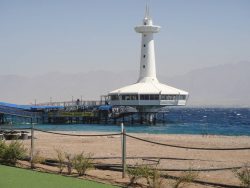
underwater observatory in Eilat
However, the South African connection continues in that Eilat’s world famous underwater observatory – part of Coral World – was the vision of another South African, Benoni-born, and international businessman and philanthropist Morris Kahn. A recipient today of honorary doctorates from Israel’s most prestigious universities for his outstanding leadership and visionary contributions to the State of Israel, Kahn is the founder of international communications provider the Aurec Group and Israeli software giant Amdocs.
When asked in 1995 by the writer, what excited him most of all his numerous business interests, Kahn replied with boyish enthusiasm, “My Coral World project – coral is my hobby, my passion and my love.”
Today, he is also one of the sponsors of SpaceIL, a non-profit organization established in 2011 aiming to land the first Israeli spacecraft on the Moon and in so doing, inspire the next generation in Israel and around the world to choose to study science, technology, engineering and mathematics (STEM).
As the late President Shimon Peres said of Kahn, “Most experts comment on things that have happened; Morris is an expert on things that may happen.”
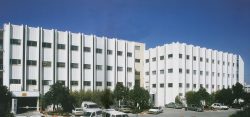
Giron Tech. Park
And so as well with the late Prof. Gilbert Herbert, who through his education in architecture, has influenced changing landscapes in Israel, South Africa and the world.