By Peter Bailey
“You’ve had two glasses of water already, Johnny; it’s enough; you know the situation; have Coke!”
This “setting” at a South African dinner table may appear as over-the-tap – pun intended – but the “situation” is real: Demand for water in South Africa outstrips supply.
When one compares South Africa receiving an average annual rainfall of approximately 464mm compared to the global average of around 860mm, the magnitude of the water problems facing South Africa becomes hugely apparent. Most of South Africa is within a summer rainfall region while the Western Cape receives its rain in winter. Furthermore, South African suffers periodic droughts; some lasting for up to seven years. Compounding these ‘naturally’ presented factors, the government-managed South African Water Affairs Department, relies on numerous dams across the country for the bulk of its water supply. These dams in turn are reliant on the irregular rainfall to remain sufficiently full to supply the country’s ever increasing water needs.
If all this is not bad enough, listen to the ideas presented by the government!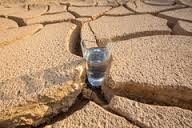
South African Minister of Water Affairs, Nomvula Mokonyane, believes the answer lies in bringing in Cuban Water Engineers to help the country solve its continually recurring water shortage crises. At present, the Western Cape is in the throes of a devastating drought accompanied by life-threatening water shortages and water rationing as the dams run dry following the absence of the seasonal winter rains. There are two major ironies in the ‘solution’ that the South African Government is offering in its efforts to alleviate the national water shortage.
Blind Leading the Blind
The first is that Cuba itself is in dire water shortage straits and is now the beneficiary of assistance from the UNESCO-IHE water programme run by the Delft Institution for Water Education in the Netherlands. How Cuban trained water engineers are going to solve South Africa’s water problems if they can’t resolve their own is a question that Water Minister Mokonyane needs to answer the people of South Africa – truthfully!
By the way the Cubans will be costing South Africa R31.8 million for the 2016 – 2017 year while at the same time the Water Ministry has debts totalling R3.5bn according to a City Press report published in February. City Press also reported that the department was broke and couldn’t pay contractors the amounts due to them. So, despite being broke, money is available to pay Cuban engineers who are clueless, while Israelis who are the world’s ‘Number One’ experts in the field are spurned.
Go figure!
Maybe the Caribbean island threw in some Cuban cigars to smooth the deal.
South Africans First
The second irony is that South African Universities decided to cut research ties with Ben Gurion University of the Negev, based in Beersheba in the heartland of Israel’s Negev Desert.
Why shun the world leaders who are fulfilling the biblical prophecy of making the desert bloom?
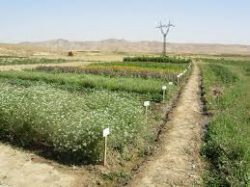
Why is Israel’s dry arid desert, whose habitants would cry to receive a tiny percentage of South Africa’s annual rainfall, able to have a thriving export agriculture industry?
And the reason why South Africans must suffer is because some of their leaders are buying into the lies and distortions perpetuated by South Africa’s BDS movement whose fundamental aim is to destroy the State of Israel – all at South Africa’s expense. Does any of this make any sense?
The Cubans must be laughing all the way to the bank at South Africa’s stupidity, which unlike its water resources, is in constant supply!
 Israel is the one country that has, the expertise, the technology and the genuine overwhelming desire to assist South Africa alleviate its water woes, and South Africa says, “No thanks.”
Reflecting this stupidity, MPs from the governing ANC Party are prohibited from visiting Israel to see for themselves – probably out of fear that they will be exposed to the folly of their leaders, whose brainwave is: “Call in the Cubans.”
Needs Dictate Direction
Interviewed at Israel’s latest WATEC conference – attended by many SA officials and private-sector industry leaders – Israel’s ambassador to South Africa, Arthur Lenk, revealed that:
Advising on how “South Africa can learn from Israel how to “make” water,” the Ambassador added that he perceives a “growing awareness of the dangers approaching South Africa as a dry country with water needs that impact every aspect of its development.”
Examples abound of the kind of assistance that Israel and Israeli companies can provide. An Israeli company is currently building the largest desalination plant in the United States, while there is a highly sophisticated integrated plan for the development and management of an adequate water supply between Israel, Jordan and the Palestinian Authority. There are no borders – or 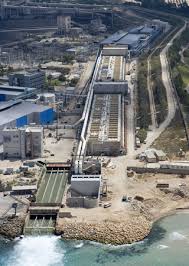 boundaries – when it comes to solving environmental needs between neighbouring countries.
Besides the fact that Israel is the world leader in the desalination of seawater, it also enjoys that same status in the purification of wastewater. Israel treats 85% of its wastewater for agricultural use which is a whopping 68% more than second placed Spain, which treats 17% of its wastewater for the same purpose.
Throughout Africa, Israel is proving herself ready, willing and able to aid in water technology. Ambassador Lenk’s gave the example of the Israeli based Netafim Corporation which developed the drip irrigation system and has opened a factory at Kraaifontein near Cape Town – combining local labour with Israeli technology. The company has developed a specially designed range of products suitable for emerging farmers. What’s more, they have established an export market which the South African company is now exporting to countries that publicly proclaim not to buy goods that are labelled “Made in Israel”.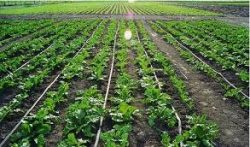
Of course, their position is farcical.
Brotherly Love
So much then for South African Governmental disapproval of business and contacts with Israel and Israeli-based companies. The current Israel-South Africa projects are mainly ‘micro’ in scope, while the national water crisis is a ‘macro problem’. However, the day will surely arrive when a South African government will place the needs of its people ahead of misguided political agendas, and when that dawn arrives, Israel will still be there to provide its expertise to its brothers and sisters in South Africa.