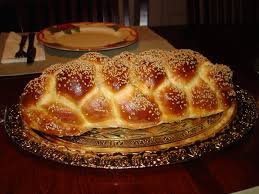
A Twist in the Tale
A real give-away as to our South African roots is to ask for a ‘kitke’.
Appearing exclusively in South Africa’s Yiddish lexicon, it begs the question:
What is the origin of the word?
Don’t look to the Poles, for while apparently, there is a Polish word ‘kitke’ meaning “twisted”, this is closer to a red, not a gehakte herring. The Polish derivative was never used in Europe to describe the ‘Shabbos’ bread and so was never elevated to a linguistic heirloom.
The answer lies not from where the Jewish immigrants came but to where they initially settled – Kimberley!
With the discovery of diamonds in the Cape Colony in 1867, many Jewish immigrants who had fled the pogroms of Eastern Europe, gravitated to this booming mining town. Then, when gold was discovered10 years later in the Transvaal, many packed up their wagons and headed to Ferreirasdorp, today an inner-city suburb of Johannesburg but then a rugged mining camp. Referred as the “cradle of Johannesburg”, it was where the first diggings started, where the first diggers settled and to where the Yiddisher crowd from Kimberley arrived, seeking – quite literally – the ‘Golden Madinah’.
Now the plot thickens like the dough in the Challah for with many of these new arrivals they were joined by their Khoi servants who had initially hailed from the vast Griqualand region.
The Real McKhoi
Observing the womenfolk with their long-plaited hair, and how they used to plait the hair of their daughters, the servants came up with a description for this strange hairstyle ‘kitkhoi’, using the Khoi word for ‘twist’.
Now, as there were no bakeries, and all Challas for Shabbat were baked in private homes, it was mostly the Khoi servants that would deliver the Challas to the various Jewish households and tell them that they were delivering the ‘kitkhois’.
In time, this Koi invented word would emerge as the formal name for challas in South Africa – kitka!
What’s Cooking?
Expect your neighbours to come knocking when you follow Anne Abarbanel’s recipe for Challah! That is because their noses will be irresistibly drawn to a ‘heavenly’ aroma.

Anne preparing the doe for her Challah
Ingredients
Instructions