Prestigious British medical journal – The Lancet – three years later redeems itself
A lancet is a double edged surgical knife but it is also the name of the internationally esteemed British medical journal – The Lancet. When it comes to Israel, the journal’s recent history has lived up to its namesake – a doubled edge ‘sword’!
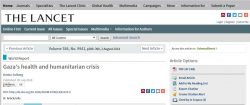
In July 2014, The Lancet stuck its sharp end into the back of the State of Israel during the Gaza War by publishing an “Open Letter to the People of Gaza” signed by doctors from several countries falsely accusing Israel of perpetrating massacres and committing war crimes. This was at a time when Israel was defending its civilian population from over 5000 rockets and trained teams of Hamas killers emerging from tunnels beneath the earth’s surface to murder unsuspecting Israelis – many of them young children – in their sleep.
“Seeing is Believing”
Lying to cover up its misconduct, The Lancet allowed this libelous letter to stand, despite its editor-in-chief Dr. Richard Horton visiting Israel to see the situation for himself. His arrival in August 2014 was at the invitation of Prof. Rafael Beyar, the CEO and Director General at Rambam Medical Center in Haifa and Professor Karl Skorecki, Director of Medical and Research Development at Rambam Hospital in Haifa. It was his first real visit to Israel. “Real” because until then, Horton had “only passed through on his way to the Palestinian Authority.” The “real” visit began a process of transformation. Horton’s perspective changed dramatically as did his relationship with Israel’s medical community.
How could it not!
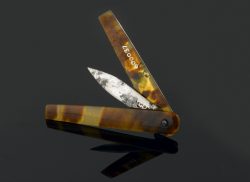
Lancet owned by Edward Jenner, England, 1720-1800.
Over three days Horton saw:
– How Rambam hospital treated injured Syrians who had crossed over the border seeking medical care
– Witnessed the number of Palestinian patients from the West Bank
– Noted that a quarter of the hospital’s staff are Israeli Arab
Most moving was his visit to the northern Israeli town of Nahariya, where he met Dr. Masad Barhoum, the Western Galilee Medical Center’s director, an Israeli Arab who was proud to call himself Israeli. During this visit, a Syrian patient, who’d been brought into Israel to receive life-saving medical treatment was having his bandages removed. The first person the Syrian patient saw was Richard Horton. It proved revelations for both: for the Syrian discovering he could see; for Horton that he too “could see” – a totally new reality! Here was the ‘so-called enemy of Israel’ – a Syrian – telling Horton how grateful he was to Israel and how well he was being treated. Since that visit, Horton has revisited Israel several times. A far cry from his earlier “just passing through”, and his relationship with the Israeli medical community has truly deepened. He wrote following his visit: “At Rambam, I saw an inspiring model of partnership between Jews and Arabs…. I saw Rambam offering an open hand, gladly grasped by families from Gaza, the West Bank and Syria who were living with life-threatening healthcare needs. I saw Rambam as one example of a vision for a peaceful and productive future between peoples, which I learned exists throughout Israel’s hospitals.”
He acknowledged that The Lancet’s “Open Letter”, failed to “convey the level of complexity that is the reality in Israel, and it’s that level of complexity which I saw last week, which having seen it, I want to build something…so that we never publish a letter like that again…. What I saw (in Israel) directly contradicted that letter.”

Professor Sir Mark Pepys
Sir Lancelot
Horton has come around and behaved chivalrous. He realised amends had to be made, and false perceptions corrected. An esteemed medical magazine rooted in truth could not be seen to have been peddling in lies.And so, in May 2017, three years after The Lancet in a pincer movement sided with Hamas in attacking Israel, it has literally turned a new leaf by devoting an entire issue to Israeli Health Care depicting it as a model to the world for striving to provide superlative and affordable medical care. It was well overdue! Horton has come a long way since his initial reaction to criticism of the “Open Letter” in 2014 by responding:
– “it’s a smear campaign” and
– “I honestly don’t see what all this has to do with the Gaza letter. I have no plans to retract the letter, and I would not retract the letter even if it [the criticism] was found to be substantiated.”
However, criticism persisted including from esteemed colleagues like Professor Sir Mark Pepys who until 2011, was Professor of Medicine at University College London and Head of Medicine at the Hampstead Campus and the Royal Free Hospital.
Sir Pepys wrote: “The failure of the Menduca et al authors to disclose their extraordinary conflicts of interest… are the most serious, unprofessional and unethical errors. The transparent effort to conceal this vicious and substantially mendacious partisan political diatribe as an innocent humanitarian appeal has no place in any serious publication, let alone a professional medical journal, and would disgrace even the lowest of the gutter press.”
In addition, Pepys accused Horton personally saying that “Horton’s behavior in this case is consistent with his longstanding and wholly inappropriate use of The Lancet as a vehicle for his own extreme political views. It has greatly detracted from the former high standing of the journal.” In response, Horton articulated: “How can you separate politics and health? The two go hand-in-hand.” In a complete about face, the editor’s subsequent visit to Israel as against “passing through” led him to express “I deeply, deeply regret” publishing the letter.
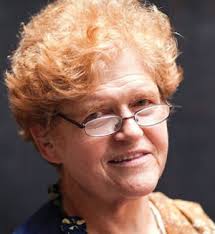
Dr. Deborah Lipstadt
Truth be Told
The Lancet was not alone in Britain in taking false positions where Jews were concerned. “We live in an age when truth and facts are under assault; when truth is on the defence,” declared Dr. Deborah Lipstadt at a TED conference in April 2017 . A professor of Holocaust studies at Emory University in Atlanta, USA, Lipstadt, was sued for libel in 1996 by British historian David Irving for having labeled him a Holocaust denier. After a ten-week trial in London in 2000 – now a major Hollywood movie called “Denial” – the British judge described Irving as one who “perverts” history and engages in “racist” and “anti-Semitic” discourse. The Times (London) described Lipstadt’s vanquishing of Irving as “history having its day in court and scoring a crushing victory.” It needed a court of law to debunk the obvious – that the Holocaust where over six million Jews were systematically murdered happened. This was over a “historian” who once accusingly questioned a Holocaust survivor: “So how much money did you make from that number tattooed on your arm?”
The Lancet was founded in 1823. It has an established reputation. So, it was understandable that nearly two centuries later, it would not want to jeopardize that reputation by identifying less with the likes of a Galileo or a Copernicus, who put their lives on the line in their quest for scientific truth, than anti-Semites like David Irving who falsify historical truths. According to Irving, gas chambers were only used to de-louse corpses and objects, after all, he maintained, there were no holes in the roof through which to insert poison! The Lancet’s 2014 “Open Letter” was inflammatory, biased and included insinuations such as that the Israelis were using toxic gas to kill civilians – implying Jews are like Nazis. The letter made no mention of Hamas’ use of human shields, that it deliberately targeted Israeli civilians, that it hid missile launchers and weapons in schools and medical centers. The letter glorified Hamas, describing it as committed to resolving political conflicts “without arms and harm”. Israel’s Ministry of Health described the letter as “bordering on blood libel”. What is more, it failed to disclose its authors’ ties to terrorist organizations. Most notably, two of the authors to The Lancet’s letter, had shared a video of David Duke – the former Ku Klux Klan Grand Wizard – railing against Jews and Israel, while another had forwarded a message claiming that Jews and Zionists were behind the Boston marathon bombings. This was the caliber of the ‘doctors’ who penned the “Open Letter”! On an academic trust scale, were the authors in The Lancet letter, any different to the contriving anti-Semitic David Irving?
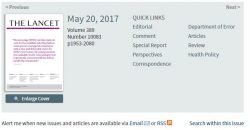
It is reassuring that The Lancet has now seen fit to make amends for past falsehoods. This was pictorially emblazoned with the exquisite cover showing one of the 12 famed Chagall windows at the internationally renowned Hadassah University Medical Center in Jerusalem, which has as its declared mission to extend a “hand to all, without regard for race, religion or ethnic origin.” The issue comprises ten articles by Israeli doctors and researchers, including summaries in both Arabic and Hebrew. Speaking in Tel Aviv at the annual conference of the Israel National Institute for Health Policy Research, Horton characterized the edition as “the most comprehensive independent survey of Israel’s health system ever published anywhere.” In addition, Horton also assailed the BDS movements efforts, saying, “Boycotting academics and Israeli professionals, as led by the BDS movement, will never be effective in helping shape public and political opinion that will promote a solution – on the contrary, it will harm these goals.”
Clean Bill of Health
The May 2017 issue of The Lancet highlights some remarkable achievements of Israeli healthcare, including the steady rise in life expectancy. Israelis born in 2015 are projected to live among the longest on average on the planet – ranking fourth in the world for male life expectancy and 11th for women.
Not only are Israelis living longer, but it’s equally good news for its infants – Israel has the lowest infant mortality rate in the OECD, a membership of 35 countries with the highest-income economies. Those unfamiliar with Israel’s superlative and affordable healthcare can read:
– “Digital Health Nation: Israel’s global big data innovation hub”
– “Israel: a start-up life science nation”
– “Women and Health in Israel”
– “Medical Educational System in Israel”
– “Medical Ethics in Israel – bridging religious and secular values”
– “Helping Hands Across A War-torn Border: the Israeli medical effort treating casualties of the Syrian Civil War”
While Richard Horton admits that an injustice against the State of Israel took place by The Lancet in 2014, the year of 2017 is an opening in a process of redemption.
The May 2017 issue of The Lancet “will not be a one-time project,” he said, and promised “It is the beginning of a close partnership”.
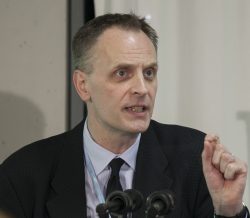
Dr. Richard Horton – Editor-in-chief of The Lancet, a United Kingdom-based medical journal.
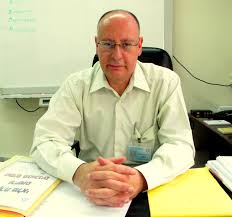
Dr. Masad Barhoum, the Western Galilee Medical Center’s director