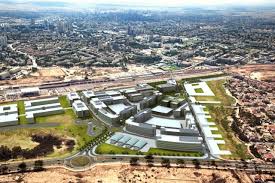
The Start-Up Nation, as Israel is so often called, owes a great deal of that reputation to the immigrants that have built a life in their new home. Jewish immigrants from all over the world are contributing to the strength of Israel’s economy and it’s reputation for high-tech wonders and innovations in diverse areas.
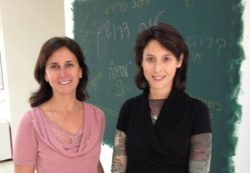
TheHive co-founders, Audrey Chocron, left and Cynthia Phitoussi.
Gvahim, or “heights” in Hebrew, is a non-profit that was started in 2006 and caters to the new immigrant coming to Israel by helping them learn how to participate in Israel’s economy, especially without language skills. Gvahim offers a product called TheHive which was started by French immigrants and co-founders Audrey Chocron and Cynthia Phitoussi, who both moved to Israel from France. TheHive is a six-month accelerator program for startups which does not provide money, but something far more valuable, a guide helping to navigate a new economy and culture. TheHive provides a workspace, guidance, and connections. A unique feature is the fact that most of the program is led by other new immigrants. TheHive runs in 6-month cycles of incubation and connects their “bees” with an experienced mentor for their duration in the program. Chocron noted that she and Phitoussi saw the need for new immigrant entrepreneurs to find support, make connections in business and in general to feel a part of the new country they had chosen to live in. TheHive is still going strong and shows no signs of stopping.

Tech-Career’s CEO Naphtali Avraham (Shoshanna Solomon/TimesofIsrael)
In a similar manner, Ethiopians saw the need to help their fellow countrymen enter the hi-tech world in Israel and open up new opportunities for a section of the population that, although it has come a long way, wants to go even further. Tech-Career, a nonprofit organization set up by and for Ethiopian Israelis is doing just that by providing training to give them the skills they need to enter the hi-tech industry in Israel. Tech-Career was established in 2002 by Asher Elias, an Ethiopian social and high-tech entrepreneur. When he founded his NGO, only four Ethiopian-Israelis were employed in the high-tech industry, and all of them had been trained in Ethiopia. Slowly, that number has been shifting higher and higher. About 21% of Ethiopian Israelis educated in Israel are in the top levels of the labor market, which is significantly higher than in 2002 when Elias first started.
Ethiopian Israelis are only 2% of the total population in Israel, but we predict that Israel will see an even higher percentage of Ethiopians entering the Start-Up Nation economy. 49-year old Naphtali Avraham, the CEO of Tech-Career, who has led the nonprofit for the past 2.5 years, says that he also wants to be sure that the students learn to give back to their community. At the age of 13, Avraham left his family and walked through Sudan to reach Israel with a group of nine children of similar ages. His drive and determination to give back to other immigrants like him has opened up a new way of thinking for this tiny portion of the Israeli community. Ninety percent of the certified graduates – or 132 out of the 147 graduates who participated in the nine technological courses from 2013-2016, are now working in their field of training. Avraham also wants to keep the diversity conversation in the forefront and hopes to continually challenge companies to look past stereotypes and see the hard work and dedication of these young people. “Promoting diversity is not only good for Ethiopian immigrants but for Israeli society as a whole.” he says.

Sambucol Black Elderberry medicine.
Have you ever reached for some Sambucol medicine when you woke up with the sniffles one morning? If so, you should probably thank this inventor and researcher. The flu is an annoying fact of life that has no cure. Grandmothers all over the world have used elderberry wine or teas in treating influenza (another name for the flu), which is the main ingredient in Sambucol. And now, Dr. Mumcuoglu has applied years of research into a possible treatment for the avian flu. “I think that Sambucol has a great role to play – it really can save lives,” Mumcuoglu told ISRAEL21c. “To my knowledge, it’s the only product that can cut the flu in half, before complications have a chance of setting in. If we do have a cure for chicken flu, this is a really positive thing for Israel.” Retroscreen Virology, a leading British medical research institute associated to Queen Mary College, University of London, announced in 2006 that Sambucol was at least 99% effective against the avian flu virus,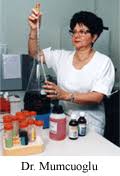 H5N1, and in cell cultures significantly neutralized the infectivity of the virus. (israel21c.org)
Mumcuoglu (pronounced mum-shu-glu) was born in Algeria and immigrated to Israel in 1974. She holds a Doctorate in Virology and studied bird flu during her Ph.D. In the 1980s, Mumcuoglu began studying the natural healing elements of the elderberry from the black elder tree (Sambucus nigra). She first became interested in the plant when she saw how many times it was referenced in medicine for many centuries. References in the writings of Hippocrates, Dioscorides, and Plinius convinced her to take a deeper look. Working from Hebrew University Hadassah Medical Center in Jerusalem she continued the research and testing. The first test on infected patients in the Southern Israel flu epidemic of 1992 and 1993 was very encouraging. Within 24 hours, 20% of those patients taking Sambucol had dramatic improvements in symptoms like fever, muscle aches and pains and coughing. By the second day, 73% were improved and by day three, 90%.
Another incredible factor is that Sambucol has been tested against different strains of the influenza virus and is effective at reducing the infectiousness of all tested. This is huge considering that various vaccines are developed specifically to counteract specific strains and the strains can become immune and then a new vaccine must be formulated. With Sambucol, it is possible to see a future with no fear of a pandemic of the avian flu, or any other flu for that matter, and deaths associated with the flu could be reduced significantly.
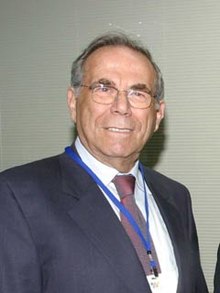
Stef Wertheimer, Founder of ISCAR (wikipedia)
A completely different, but no less needed field, also saw an innovation by a determined inventor whose family immigrated to Israel,(then called Palestine) from Germany in 1937 to escape the Nazi’s. Stef Wertheimer dropped out of school at a young age and went to work in a camera shop where his lifelong tinkering and fixing things started. In the years leading up to the formation o fthe State of Israel, he continued his work and was a technical officer for different branches of the fledgling state-to-be. After the 1948 Arab-Israeli War he started working for an Israeli defense contractor but was dismissed relatively quickly when they discovered he had no formal training. So, in 1952 he decided to start his own company in the backyard of his home in Nahariya, Israel. Thus began, ISCAR, a tool and metalworking company that today is worth millions upon millions. ISCAR is a true global leader in metalworking innovations. It devotes approximately 8% of its total resources to R&D activities, with individual teams continuously competing against each other to produce new innovative products which must perform 50% better than previous versions.
Wertheimer is also known for opening industrial parks and working to increase cooperation between Arab and Israeli counterparts. A brand-new industrial park in the predominantly Christian-Arab city of Nazareth opened in April 2013. Wertheimer and Nazareth Mayor Ramez Jeraisy explained that the industrial park is part of a unique model to promote the advancement of Arab-Jewish Israeli export companies. Each park will be based on five principles: exports, education, coexistence, community, and culture. The Nazareth Industrial Park plays an active role in strengthening Nazareth’s economic base. “The coexistence in the industrial park in Arab Nazareth is a good example. When people work together, they have no time for nonsense. They’re too tired at night to commit terrorist acts. They’re satisfied, they engage in producing. They work together, not against each other,” elaborates Wertheimer. The success of the park seems to bear this out. In 1991, Wertheimer was awarded the Israel Prize for his special contribution to society and the State of Israel. Maybe that Israeli defense contractor shouldn’t have fired him?
 A South African native and Israeli immigrant, Caylee Talpert is the Deputy Director of the Pears Program for Global Innovation that works to harness Israeli innovation and technology for solving challenges in developing countries. Tel Aviv University’s Hartog School of Government and Policy is home to the initiative and sees a hopeful future where they can make a difference in the parts of the world that need it the most. Their website states it clearly, ” Israel is one of the world’s most innovative countries. However, the vast majority of technologies only benefit the 15% of the planet’s population living in high-income countries. We are dedicated to harnessing the power of Israeli innovation to address the needs of the remaining 85% of the world population. By building bridges to the needs, opportunities and peoples of the developing world we hope to enable Israeli entrepreneurs and innovators to play a larger role in addressing the most pressing challenges of our time: ensuring water, food, clean energy, education and healthcare for all.”
Prime Minister of Israel, Benjamin Netanyahu, recently relayed a quote by tech billionaire Elon Musk. Musk was recently in Israel and commented to the Prime Minister that “Israel is a Technological Superpower and he (Musk) appreciates what Israel is doing.” Israeli immigrants are showing the world just what they are made of.