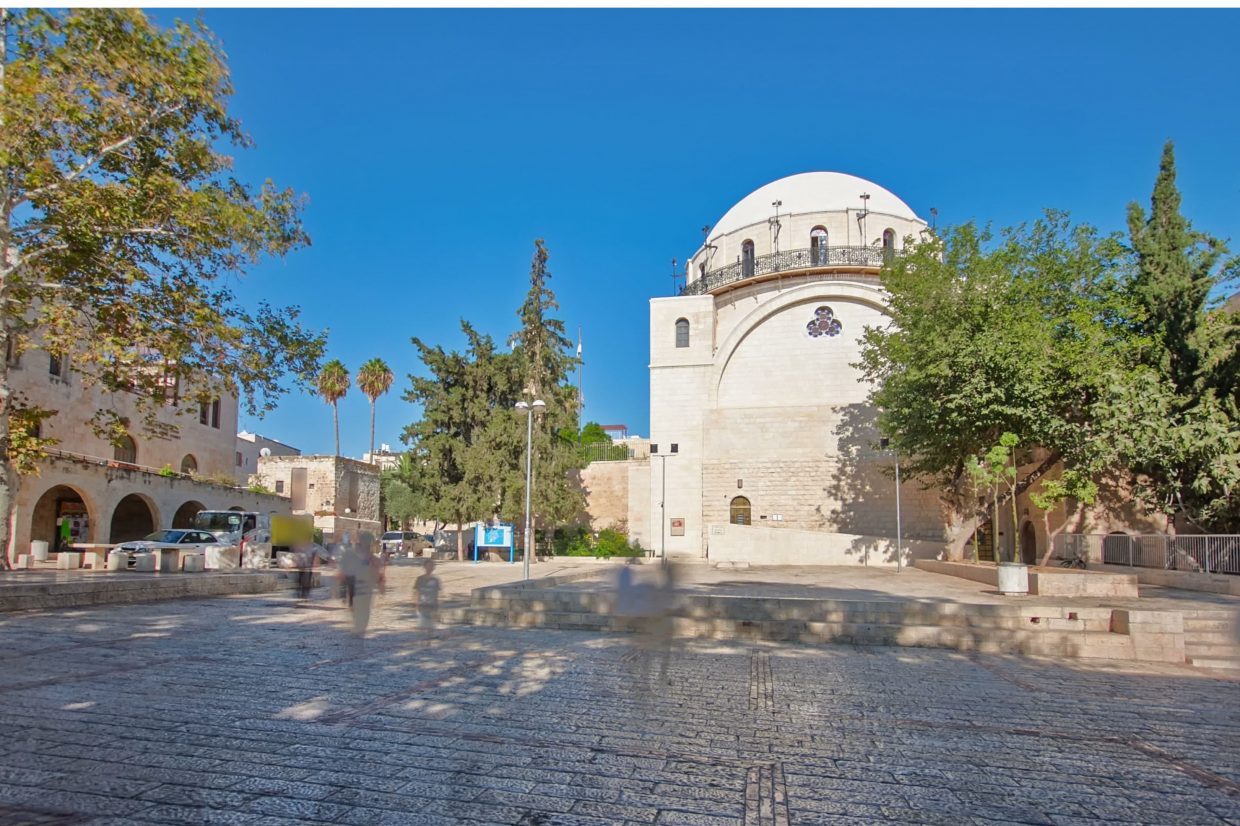
Good morning from Old City Jerusalem! Today we will continue our virtual tour through the Jewish Quarter. Last week we made our way through the ancient Roman/Byzantine Cardo, where modern Jewish art, jewellery, and gift stores abound. We arrived at the ruins of Hezekiah’s wall from the 9th century BCE, where modern-day buildings tower on either side.
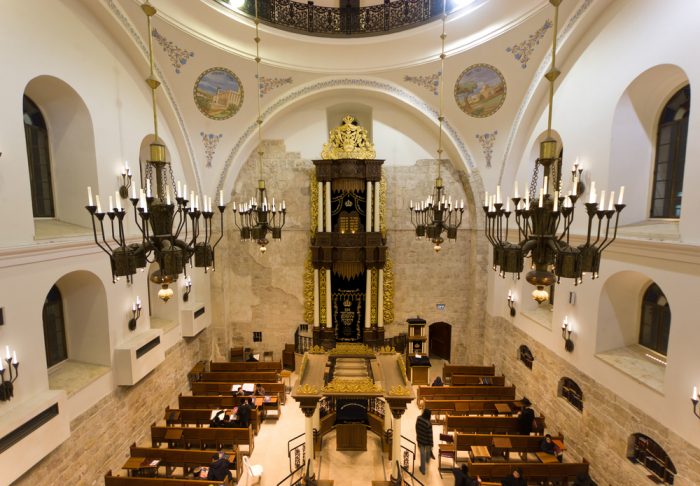
The interior of the Hurva Synagogue in present day. (shutterstock.com)
Now, we walk just around the corner and are standing in a large open square; to our right is a beautiful white domed building, called the Hurva Synagogue. It is a masterpiece reproduction of a building with a very interesting history. The word Hurva means “ruins” in Hebrew. You might guess what its history will entail.
In the year 1700, Rabbi Judah Hasid came to Jerusalem with some of his followers in hopes to build a synagogue and wait for Messiah to come. He died only a few days after arriving and so the group borrowed money from local Arabs to build the synagogue and a courtyard for living quarters. The group went into heavy debt, interest accrued, and they couldn’t pay. In 1721, their creditors’ patience ran out and they attacked the courtyard and burned the synagogue to the ground, and the community fled the city.
In 1816 a group of Jews from Russia, pupils of the Vilna Gaon (the great Talmudic scholar of his time), came believing Messiah was going to come in 1840. First, they settled in Safed then they came to Jerusalem after a huge earthquake destroyed the North in 1837. They collected money and repaid the Arabs the original debts of the community. We’re talking about paying off a debt from over 100 years earlier! Wow.
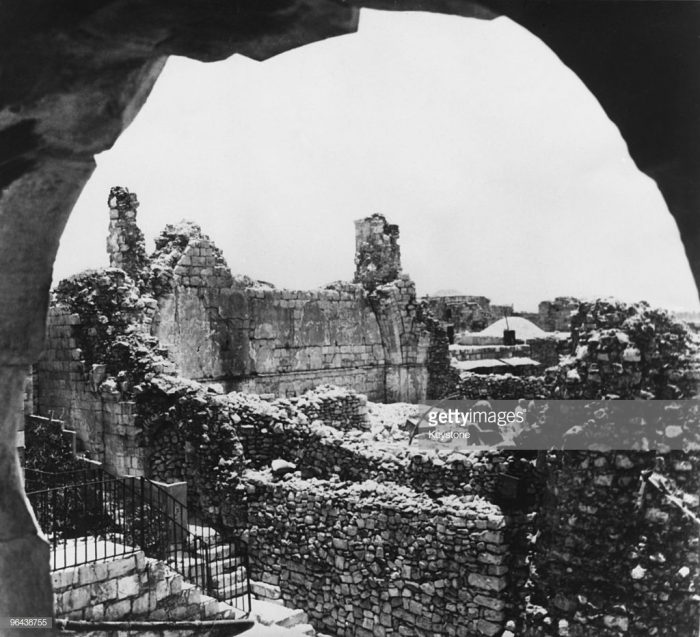
Ruins of the Hurva Synagogue after the 1967 war when the district was recaptured by Israeli forces on Aug 7, 1967.
In 1856 the cornerstone of the new synagogue was placed, and when it was finished, the white domed building stood 35 meters high and was decorated with 12 windows to represent the 12 tribes of Israel. The funding for this beautiful synagogue came primarily with the help of the Rothschild banking family. The synagogue was named Beit Yaakov, after James Rothschild, the father of the family.
Almost 100 years later, in May 1948, the Jordanian Legion entered Jerusalem with 1500 soldiers. There were only 200 Jewish defenders in the Old City. And on May 27, the day before the surrender of the Jewish Quarter, the Jordanians blew up the synagogue. And for the second time, the synagogue was destroyed, rendering its nickname, the Hurva.
The Hurva sat in ruins until after the Six Day War in 1967. When the Jews re-entered the Jewish Quarter, they had their work cut out for them. Most of the buildings were completely destroyed. The entire Quarter was cleaned up and the rebuilding began. But the site of the Hurva was commemorated with just a single domed arch. (see below) Then, in 2009, an exact replica of the original 1850’s synagogue began construction. Today, it is an active synagogue for the residents of the Jewish Quarter and a site that is a must to visit.
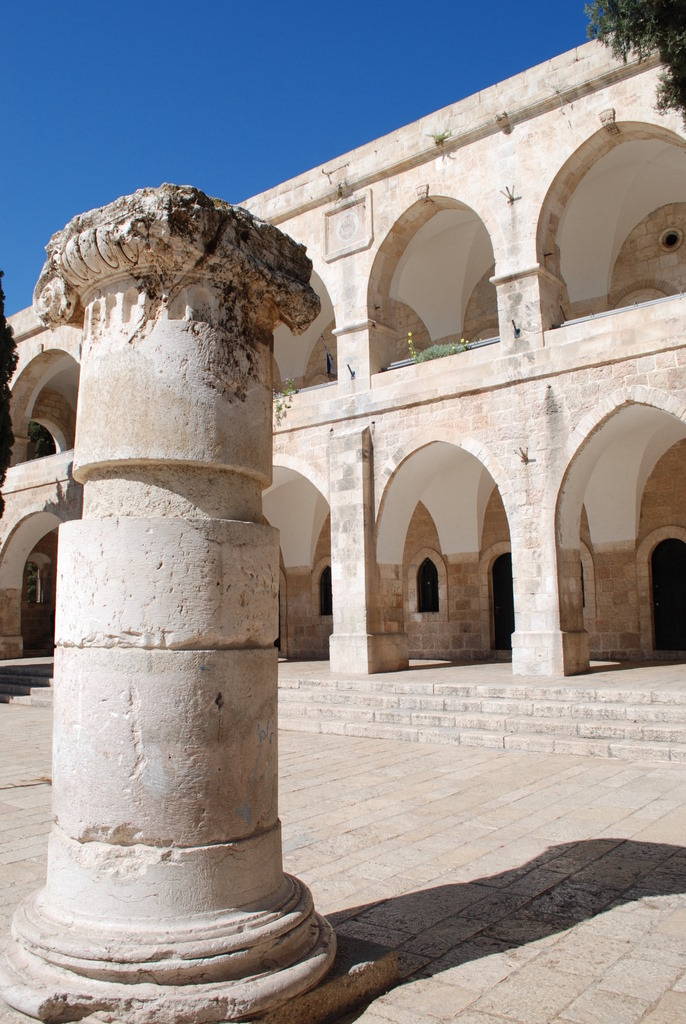
The remains of a Roman Pillar standing in front of the Rothschild House.
If we move from the square we can wind our way through the narrow stone-lined streets of the modern neighbourhood where all the buildings are built with quarried limestone. In case I never mentioned it, there are no cars allowed on most of the streets in the Old City. So just imagine that when I talk about the streets, they are just for pedestrians. The shops and restaurants disappear and we find ourselves in a neighbourhood where Jewish residents of the Old City live. Almost all the buildings are new since 1967. But there is one that withstood the war, the Rothschild House, built in 1871 as a centre for new immigrants coming to Jerusalem. Today it is the Jewish Quarter Development Co. headquarters. In front of the building are the remains of a large Roman pillar. Josephus writes that the Royal Basilica of the Temple Mount had 162 big columns just like this. He said it took three men, with outstretched arms, holding hands to surround one column. No one really knows how this column got all the way here from the Temple Mount, but today it is a life-size reminder of the Jewish presence in the city of Jerusalem of 2,000 years ago.
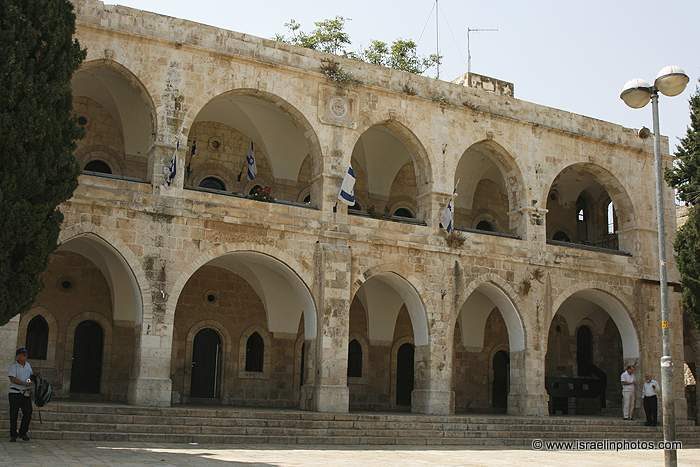
Rothschild House and Batei Mahseh Square, Jewish Quarter. (israelinphotos.com)
In front of the Rothschild House is an open plaza, where in 1948, it was the last stronghold before the Jews had to surrender to the Jordanians. They rounded up 2,000 civilians living in the Jewish Quarter and exiled them out of the city. They assembled the 35 remaining defenders and took them to a Jordanian POW camp where they stayed for almost a year. In all toll, 66 defenders were killed during the two weeks of fighting. They were buried next to the courtyard in one single grave, called a kever achim, meaning “grave of brothers.” After 1967, their bones were gathered and moved to a kever achim outside the Old City in the Mount of Olives Cemetery. Now, we stand at the memorial of the original gravesite and pay tribute to the courage and strength of the defenders of the Old City.
Whilst we can mourn over past wars and injustices, we have reason to hope. Today, as we stand in this open plaza, we can see children playing games with one another and laughing with delight. There is a scripture verse engraved on a limestone plaque: “Once again men and women of ripe old age will sit in the streets of Jerusalem, each with cane in hand because of his age. The city streets will be filled with boys and girls playing there.” Zachariah 8:4. These prophetic words have come to fulfilment in Jerusalem! Old men and women are walking in the streets and the sound of boys and girls playing can be heard all day long. This is a confirmation that God keeps His word, no matter how long it takes.
We have learned about generations of men and women who came to Jerusalem waiting for Messiah to come. For those still waiting for Messiah and those who believe that Messiah has already come and will come again, let us wait together in peace and respect. Let there be no more war!
Next week we will continue through the Jewish Quarter and to the Temple Mount. Shalom from Jerusalem.
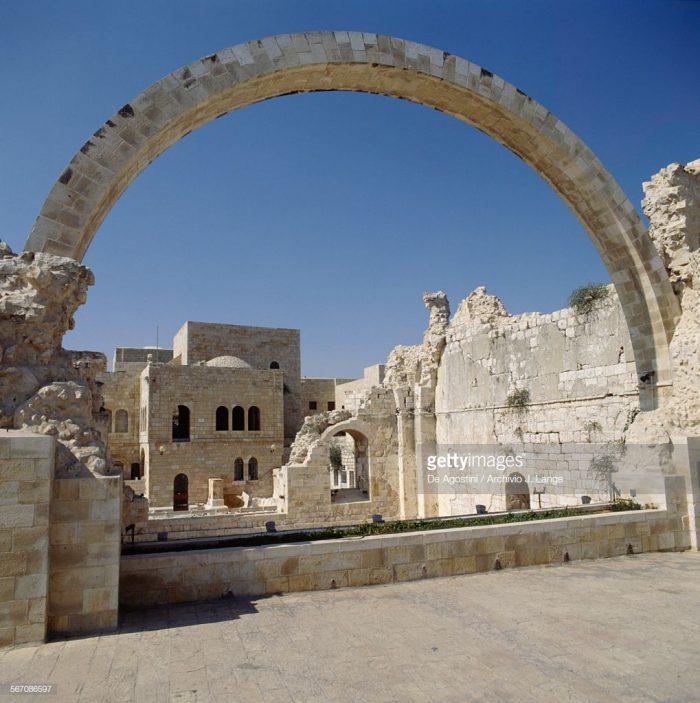
The single arch that was dedicated on the site of the Hurva Synagogue after the 1967 war.